

Black Healthcare Pioneers Whose Legacy Still Shapes Care Today
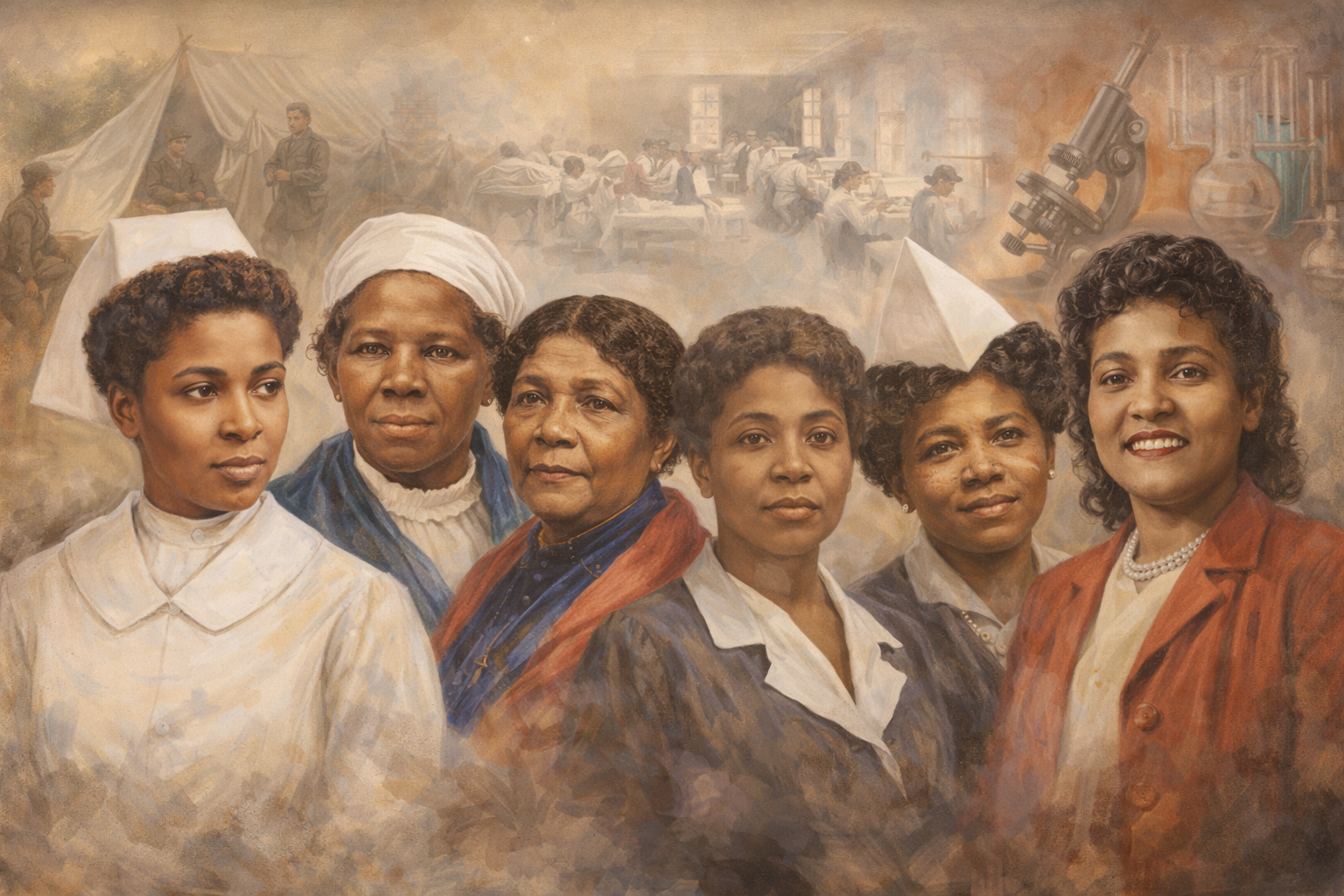
An illustrated collage depicting Black healthcare pioneers from different eras, including nurses, caregivers, and medical contributors, set against historical healthcare scenes and laboratory imagery to represent their enduring influence on patient care and medical advancement.
Black history in healthcare did not begin with access or equity — it began with determination, skill, and service.
Long before doors were opened widely, Black nurses, caregivers, advocates, and patients shaped healthcare through resilience and commitment, often while navigating barriers that made their work harder and their contributions easier to overlook. Their legacy is woven into modern healthcare, whether their names are known or not.
Mary Eliza Mahoney: Setting the Standard
In 1879, Mary Eliza Mahoney became the first African American to earn a professional nursing license in the United States.
At a time when opportunities for Black women in healthcare were extremely limited, Mahoney established a standard of professionalism, competence, and dedication that still defines nursing today. Her legacy reminds us that excellence has always existed — even when recognition did not.
Care Without Permission or Recognition
Healthcare history also includes figures like Harriet Tubman, who served as a Union Army nurse during the Civil War, and Mary Seacole, who provided critical care to soldiers during the Crimean War.
Both women delivered care in environments where racial and gender barriers were the norm. They didn’t wait for systems to change — they stepped in where care was needed most.
Public Health and Advocacy
Jessie Sleet Scales, the first Black public health nurse, helped expand healthcare beyond hospital walls, bringing education, prevention, and support directly into communities.
Adah Belle Thoms, a leader within the National Association of Colored Graduate Nurses (NACGN), fought discrimination in nursing education and employment, helping open pathways for future generations of Black nurses.
Their work laid the foundation for public health nursing, advocacy, and professional equity that continues today.
Henrietta Lacks: A Legacy That Changed Medicine
The story of Henrietta Lacks is one of extraordinary medical impact and ethical reflection.
Her cells — taken without her knowledge or consent — became the first immortal human cell line, contributing to breakthroughs in cancer treatment, vaccines, and countless medical advancements still in use today.
Henrietta Lacks’ story continues to shape conversations around patient rights, consent, trust, and equity in healthcare — conversations that remain essential.
Why These Stories Still Matter
These pioneers didn’t just change history — they influence how care is delivered now.
Their stories remind us that:
healthcare excellence has always existed within marginalized communities
progress requires acknowledgment and accountability
trust in healthcare is built through respect, representation, and integrity
Honoring Black healthcare pioneers means remembering the people behind the progress — not just during Black History Month, but every day.
