

Black History Month: When Care Came From the Community
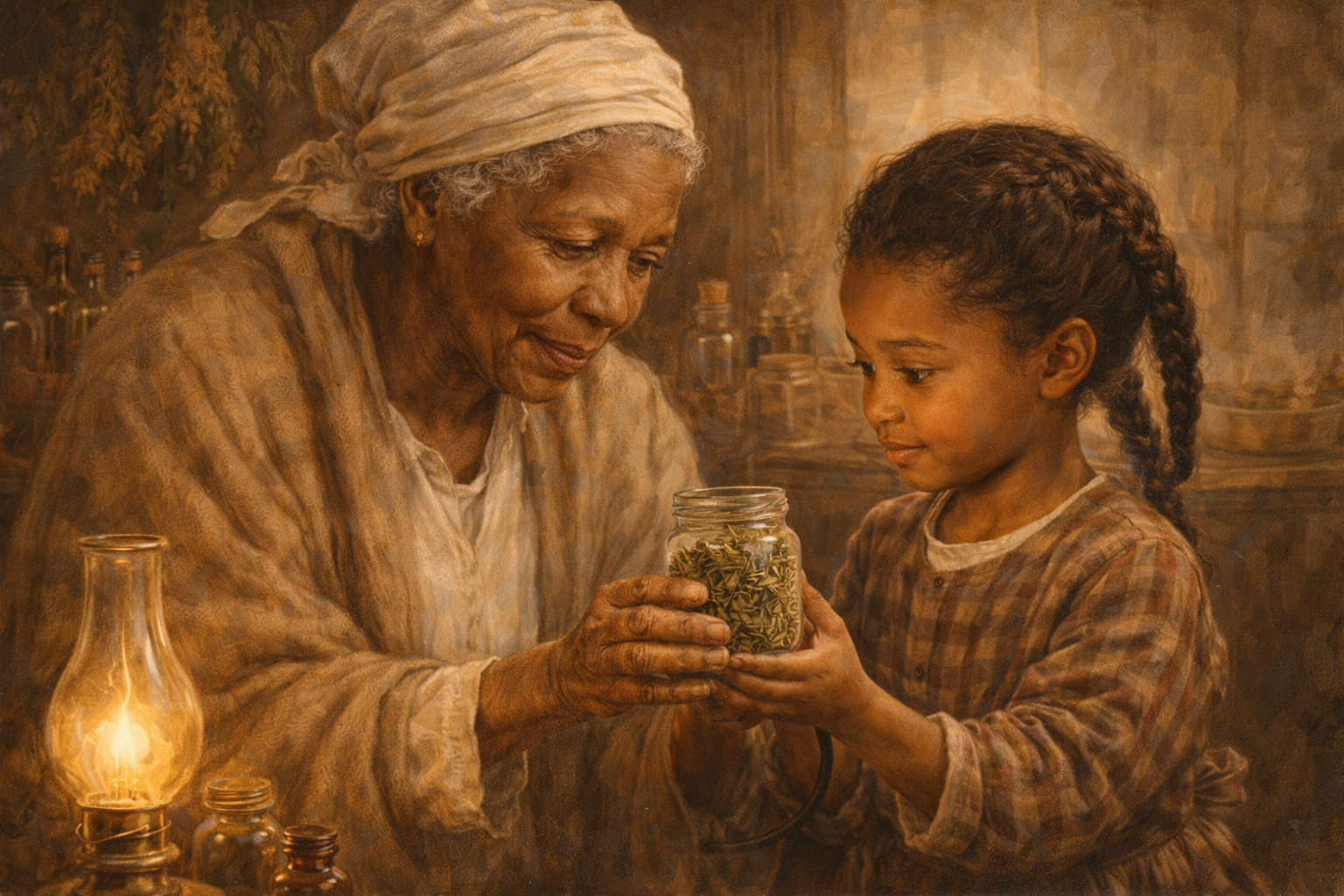
Elderly African American woman teaching a young girl about herbal medicine, symbolizing generational healing, Black healthcare history, and ancestral caregiving traditions.
Before healthcare was institutional, regulated, or reimbursed, it was personal.
In many Black communities, care didn’t come from hospitals or clinics. It came from kitchens, gardens, back rooms, and trusted hands. Knowledge was passed down, remedies were created, and healing happened long before it was formally recognized or documented.
That history is often left out of the conversation — but it shaped healthcare more than people realize.
Care That Existed Before Permission
In my own family, that history is personal.
My great-great grandmother and great-grandmother made medicine. They created remedies and sold them to white doctors to be used for healing. Long before access or acknowledgment, Black women were contributing knowledge, skill, and care to the very systems that would later exclude them.
That wasn’t folklore. That was healthcare.
It was science before it was called science.
It was expertise before credentials were offered.
The Unspoken Foundation of Healthcare
Black caregivers have always been present — not just as labor, but as contributors to medical understanding. Herbal knowledge, practical healing, patient observation, and community-based care were essential to early medical practice, even when credit was not given.
This wasn’t accidental. It was necessary.
When formal systems didn’t serve Black communities, communities served themselves — and, quietly, served others too.
From Informal Healing to Formal Practice
As healthcare became institutionalized, much of that early knowledge was absorbed into formal medicine without acknowledgment. Meanwhile, Black caregivers continued to move into nursing, public health, and long-term care roles — still providing care, still adapting, still carrying forward traditions rooted in service and resilience.
The setting changed.
The commitment did not.
Why This History Matters Today
Understanding this history adds context to modern healthcare. It explains why trust matters. Why community knowledge matters. Why representation matters.
Care has never been one-dimensional. It has always been shaped by people who understood healing as responsibility — not just occupation.
Black History Month gives space to say that out loud.
Black healthcare history isn’t just about firsts or famous names.
It’s about families. Communities. Knowledge passed down.
It’s about care that existed long before it was recognized.
And that history deserves to be remembered.
